EAN.UCC Composite
Introduction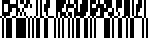 An
EAN.UCC Composite symbol consists of a linear component (encoding
the item's primary identification) associated with an adjacent
2D Composite Component (encoding supplementary data, such
as a batch number or expiration date). The Composite symbol
always includes a linear component so that the primary identification
is readable by all scanning technologies, and so that 2D imagers
can use the linear component as a finder pattern for the adjacent
2D Composite Component. The Composite symbol always includes
a multi-row 2D Composite Component, for compatibility with
linear- and area-CCD scanners, and with linear and rastering
laser scanners. An
EAN.UCC Composite symbol consists of a linear component (encoding
the item's primary identification) associated with an adjacent
2D Composite Component (encoding supplementary data, such
as a batch number or expiration date). The Composite symbol
always includes a linear component so that the primary identification
is readable by all scanning technologies, and so that 2D imagers
can use the linear component as a finder pattern for the adjacent
2D Composite Component. The Composite symbol always includes
a multi-row 2D Composite Component, for compatibility with
linear- and area-CCD scanners, and with linear and rastering
laser scanners. Each EAN.UCC Composite symbol consists of a linear component and a multi-row 2D Composite Component. The 2D Composite Component is printed above the linear component at a specified location relative to the linear component and with the same X dimension as the linear component, to facilitate image processing when the Composite symbol is scanned by a 2D imager. The linear component is one of: |